

Memorial Day 2026
Or Reflections on Reflection

I gave this speech two days ago to small gathering. I hope you read it with curiosity and reflect on its meaning.
Memorial Day 2026 Speech—St. Peter’s Cemetery, Duchess County, NY
Memorial Day should be one of solemnity and remembrance, bookended by Veteran’s Day in November. No store should be open and there shouldn’t be “sales” to commemorate it. It is the least we can do for the fallen, but our society cannot pass up an opportunity to make money and therefore will never embrace the concept.
So, as we BBQ and enjoy a day off, I believe it’s worth reflecting upon why we can do so, embodied in one word: Sacrifice. And not just those who were killed, but the act of military service as a bedrock.
The military bears the burden of the American experiment, and it is the veteran who shoulders the lion’s share. We thank them, to a degree, but we generally live without a shared experience of sacrifice.
American politicians should well consider this before employing the U.S. military. Doing so comes at a cost, particularly a human one. And our nation’s leaders will not write the personal check with their own bodies or that of their children. It is “other people” who serve, and fight, and die.
That’s what bring us to today.
Memorial Day’s origins stem from the American Civil War. The first national observance of what would become Memorial Day occurred on May 30, 1868.
The holiday was proclaimed by General John A. Logan, Commander-in-Chief of the Grand Army of the Republic – a fraternal organization of Union veterans – to honor Union soldiers who had died in the American Civil War.
This national observance followed the example of many local observances which were begun between the end of the Civil War and Logan’s declaration, then known as Decoration Day.
Many cities and people have claimed to be the first to observe it, however, the National Cemetery Administration, a division of the Department of Veterans Affairs, credits Mary Ann Williams of the Ladies Memorial Association of Columbus, Georgia, with originating the idea of an annual date to decorate the graves of all Civil War veterans with flowers. It was meant to be a somber one where Americans on both sides remembered the fallen in what was the Nation’s costliest war.
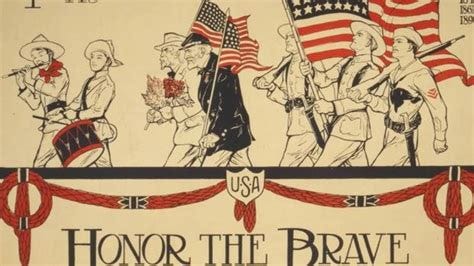
Official recognition as a holiday spread among the states, beginning with New York in 1873. By 1890, every state had adopted it. The world wars turned it into a day of remembrance for all members of the U.S. military who fought and died in service. In 1968, Congress changed its observance to the last Monday in May, and in 1971 standardized its name as “Memorial Day.”
Ironically, Arlington National Cemetery was established on the grounds of Robert E. Lee’s home as a punishment and constant reminder of the toll of the Civil War. 60,000 veterans and statesmen are buried there.
I served 24-years as a United States Marine Corps Officer. I am also apolitical. I served because I believe in Democracy with the big ‘D’ and the Republic with the big ‘R’. I’m a proud veteran and antiwar with good reason.
I fought for my country in a 20-year war people have forgotten about. During that time, I served eight combat deployments on three continents and made decisions as to whether people live or die, ones I carry with me every day of my life.
I had two killed and fifteen wounded under my various commands. I take all of them personally. It was me that made the decision to send them into combat. They knew the risks and went anyway. And have so many friends and colleagues buried in Arlington National Cemetery’s Section 60 that it would take me an entire afternoon to visit them all.
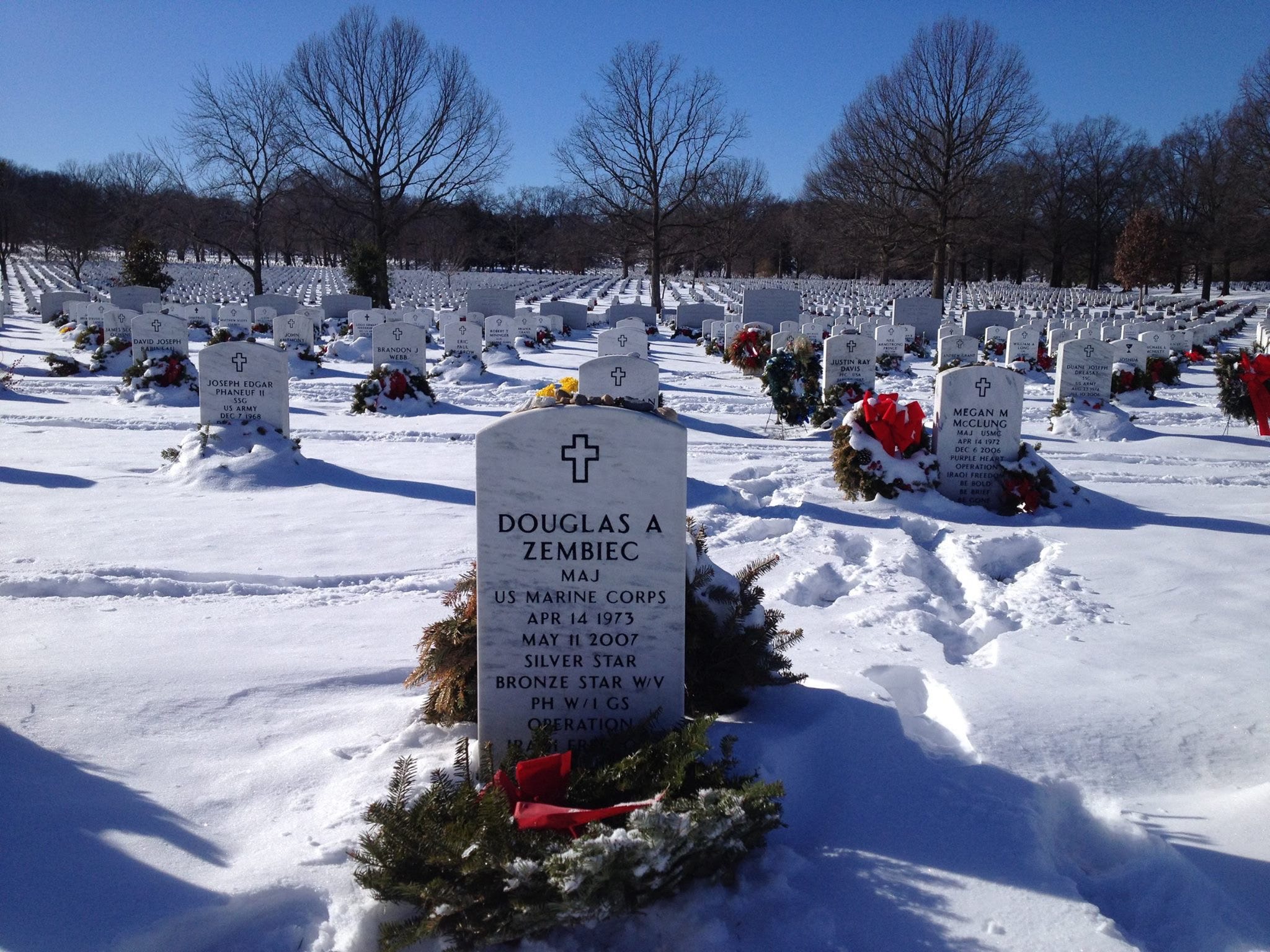
Today, we remember fallen comrades who, to quote the journalist and war veteran, Andy Rooney, “didn’t give their lives. Their lives were taken from them.” Marines like 1st Lt James Zimmerman, killed in Marjah, Afghanistan, on November 2, 2010. He took the place of one of his Staff Sergeants on a patrol and died leading his men from the front. We also remember HM2 Luke Milam, a Navy Corpsman killed while defending wounded Marines. He was the first person I had killed under my command, and I am proud to have served with him.
Serving in the military is unique—less than 1% of the U.S. population does so— and it is perhaps one of the most impactful things a person can do. Though it is one of sacrifice, there is a value in military service.
Take for example Fred Smith, the late founder of FedEx, and likely one of America’s titans of industry. He was a Silver Star recipient and served as a Marine Infantry Company Commander in Vietnam. He was the guest speaker at a Marine Corps ball on the Intrepid aircraft carrier in NYC several years ago at which I was able to see him speak. He talked of his time in the Corps and how, even with all his success, that the thing he was most proud of was being a U.S. Marine. Then he closed with something I’ll never forget.
He said that he lost 18 Marines. He then said that if you can say their names they are not forgotten and proceeded to name all of them without notes. That impressed me.
Along with the 49 veterans buried in this cemetery, please take a moment to remember:
Major Douglas Zembiec
Captain Garrett Lawton
Captain Allen Rowe
Master Sergeant Scott Koppenhafer
Master Sergeant Troy Mitchell
Master Sergeant Eden Pearl
Master Sergeant Aaron Torian
Gunnery Sergeant John Gifford
Gunnery Sergeant Javier Obleas
Sergeant Nicole Gee
Corporal Jonathan Cohen
Corporal Travis Woods
This leads to the question: For what did they die and was it worth it?
Those who serve are someone’s son or daughter, brother or sister, father or mother. Their tombstones reflect the cost of empire and folly, and our politicians should attend the funerals of the people they sent to war and feel a father’s rage and mother’s sorrow as they bury their child. It is to the memory of the fallen—of veteran’s past—that we’re privileged to gather today in somber reflection and enjoy every subsequent moment in our lives.
They did it for us. Current servicemembers do it for you. They went when and where asked, whether a volunteer or a draftee, and served the nation. They didn’t have a choice in whether the conflict in which they served or died enjoys a positive legacy, that is incontrovertible. We must respect and commemorate the fallen for their service to this great country and separate our opinions as to whether they died in a just war.
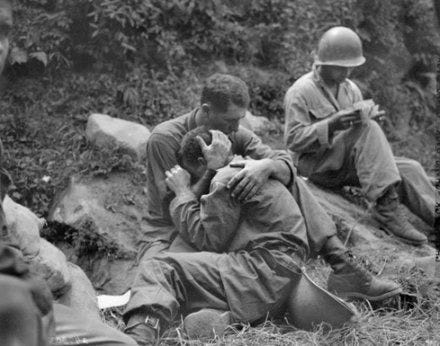
What matters is that they served despite the risks and they cannot be held hostage to ill-conceived forays. If anything, their service and sacrifice should be viewed with respect and admiration since they cannot be held accountable for the decisions that put them in harm’s way. Politicizing their sacrifice does them a dishonor.
In 2026, the year of our nation’s 250th anniversary, I urge our fellow citizens to recall that America was established as a republic with a citizen-soldier ideal that promoted peace. We must make it worth it by being the best citizens we can be and scrupulously defend what it means to be an American for all Americans.
As evidenced by the 49 veterans buried in this cemetery, some dating back as far as the American Revolution, many of whom lived full lives after their service, the country is worth fighting for because of the ideals upon which it was founded. It is up to us to ensure it remains the beacon of freedom, however imperfect, for that is with what they entrusted us.
Thanks for sticking with me.
Please consider becoming a paid subscriber. It’s $2 a week—less than a beer when you go out and perhaps as satisfying without the caloric deficit—and $80 annually. It really helps me as a writer, and you’ll receive access to exclusive content including advanced project previews and releases. Thanks!