
The Show
Or There's Something You Should Know...

Madison, WI. July 16, 2026. After months of preparation, my show, There’s Something You Should Know…Service and the Aftermath of Modern Wars, debuts this evening.
One hour before I take the stage, though I’ve been here for two days, rehearsing music and adjusting, rethinking, and tinkering with the script. I’m still not sure I’ve got it right.
Unseasonable heat and smothering Canadian wildfire smoke greeted me upon arrival, and now these mix with a pall of nervous anticipation. My throat feels like knives are aligned to either side due to the so-called air quality. The building in which we’re performing is more than 100 years old. The window-unit air conditioners are working overtime in a losing battle. I examine my notes, consider the six-song set list we’ll play. No, I’m not ready.
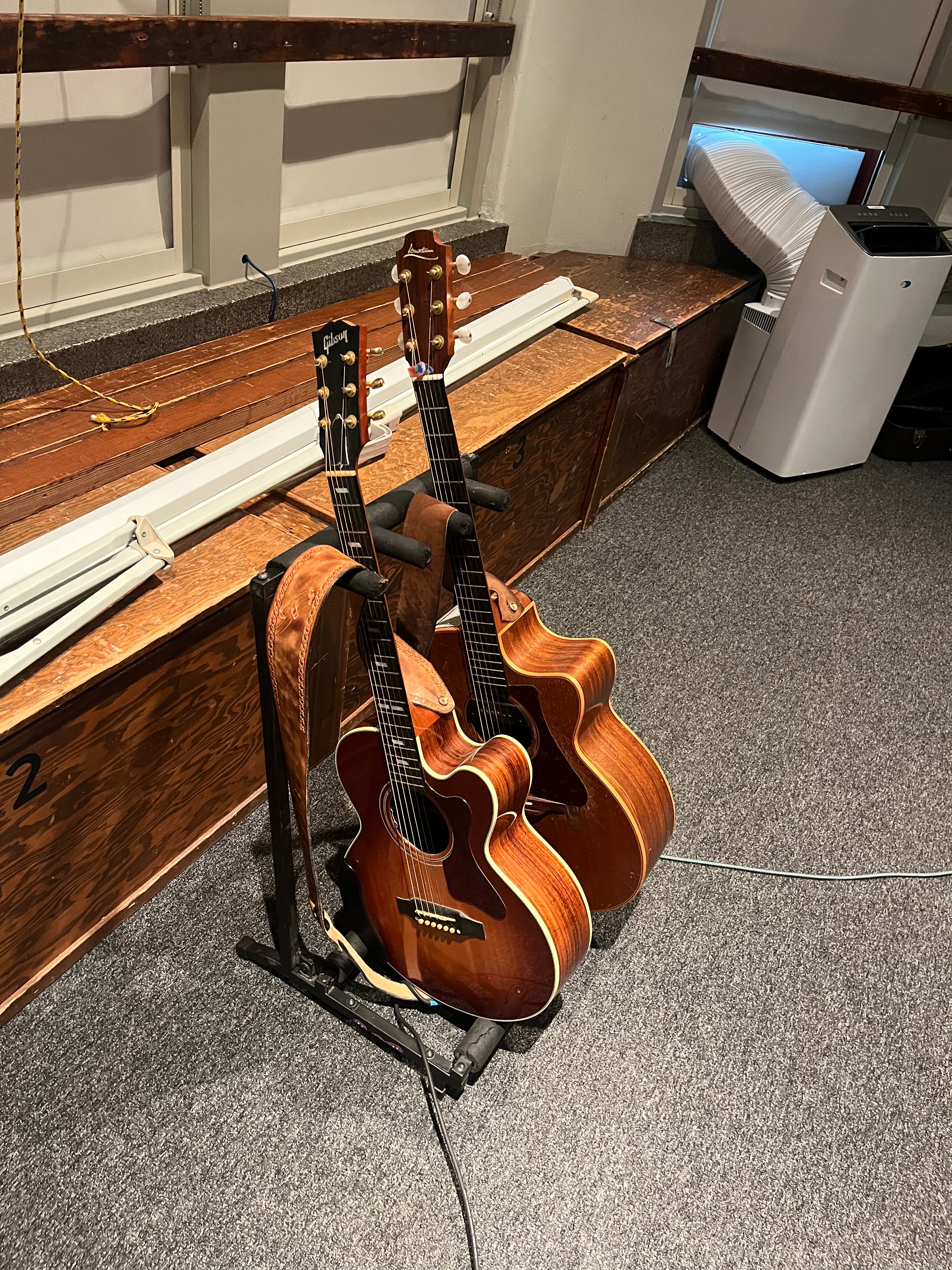
My friend and former Marine, Benjamin Fortier, assisted in creating this performance, including the title. He also graciously lent me his poetry to augment the message. His book, Phantoms is an amazing tome of verse.
I also reflect on the counsel and tutelage from my friend and Army vet, Chris Meyers at Savage Wonder, and jot a note to thank him for his support and feedback as I designed the program, for which he provided review and improvements.
But what is this thing about? America has been at war for all of the 21st century. It’s so commonplace in our collective experience it no longer registers with the general population.
Less than 1% of people serve in the military, and fewer than 6% have served over the past 25-years. This means the gap–known as the Civil-Military divide–between those who’ve served and those who haven’t is growing wider. Americans don’t know how to talk to veterans and the veteran population is becoming invisible
This show attempts to bridge that gap through shared experience and commonality with which people can identify. Feelings of emotion and alienation, loneliness and trauma, of memory, ethics, and morality are not germane to veterans, and can be experienced by anyone, though the situations in which they do may differ.
The Veterans Advocate highlights their great work in supporting Veterans rights and benefits. Reading their column spurred on my efforts to bridge the gap I’ve identified. I believe it is up to the veteran to close it.
There’s an importance to music and dance, verse and prose, and I can think of no better vehicle than in music because everyone likes being entertained. Even my Afghan adversaries enjoyed when we played guitars at night around fires.
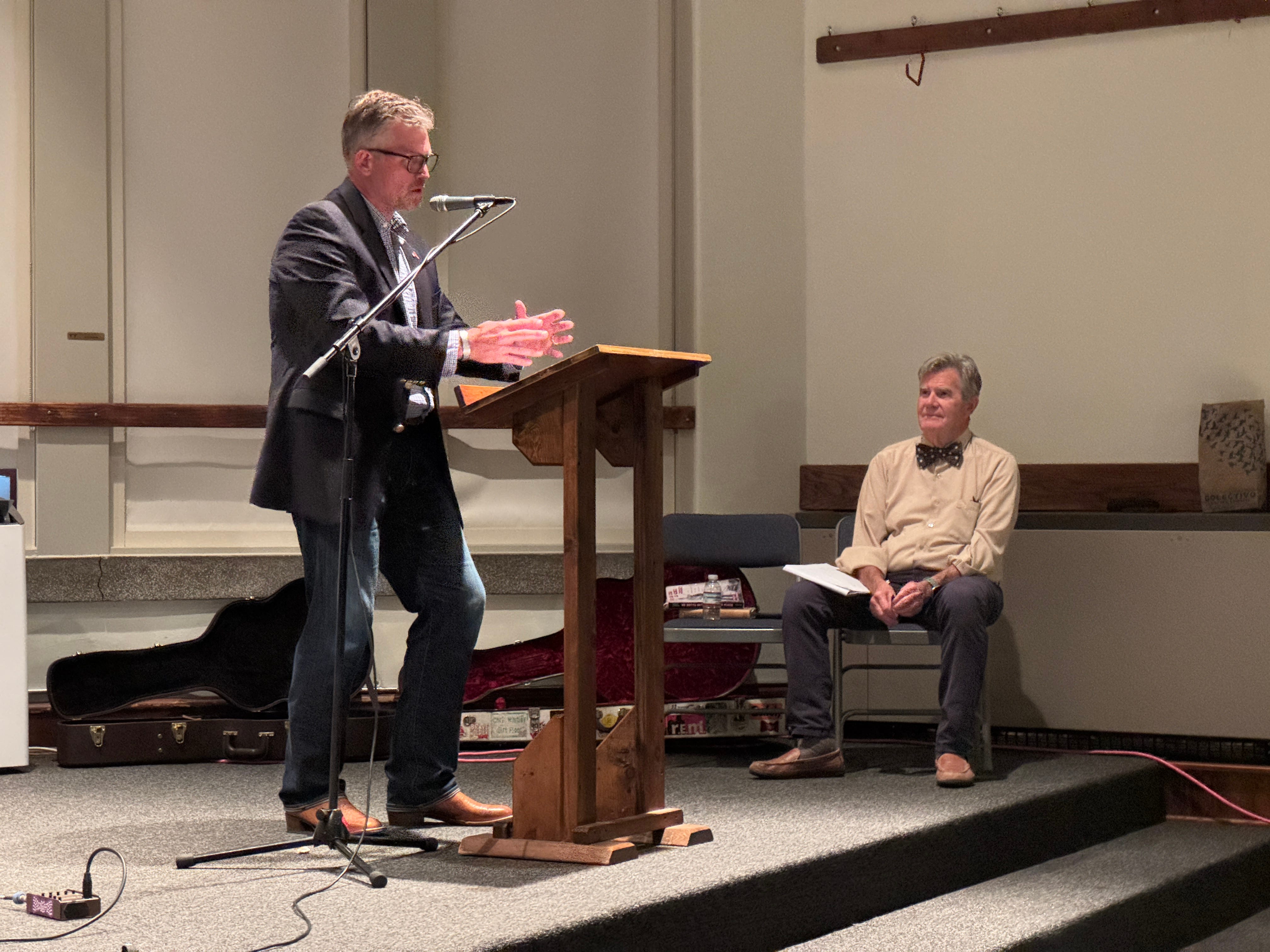
Tonight, my dear friend Sean Michael Dargan, his drummer Bill Guetschow, and I will take the audience on a journey. One that causes them to pause, to think, to consider. We welcome their participation on this intimate evening where we explore military service and the continued impact of modern wars, combat, and reintegration into society.
But it’s not just us. I’ll share the stage with a hero of mine, writer, speaker, and fellow veteran Doug Bradley, who authored an amazing book about service, music, and healing from the moral injury of the Vietnam War called, We Gotta Get Out of This Place.
Doug Bradley. He wrote the 2015 Music Book of the Year as rated by Rolling Stone Magazine. This overwhelmed me. I’m buried in self-critical analysis and a supreme feeling of imposter syndrome.
I’m not a real musician and not an accomplished writer, at least not a critically acclaimed one. Real writers have awards and accolades, reviews and followings. they don’t hock books from the trunk of their car. Real writers books sell themselves. Real musicians look and sound like Sean and Bill. Real musicians have records. Real musicians aren’t concerned with chord changes and keeping pace because their left wrist is permanently fucked up and it makes them self-conscious.
A litany of misgivings runs through my mind in rapid succession. Who cares what I have to say? I even had a guy write me once telling me to go fuck myself because it didn’t matter what I thought—he was too busy to talk with me, but took the time to tell me to fuck off—at least I struck a nerve. How will the show be received? I haven’t done a full dress rehearsal of this, we just integrated Doug this evening, and I’ve never played with Bill, never mind singing accompanying harmony with him to augment Sean’s amazing voice. Shit…
But then I think, no, I deserve to be up there and what I’m doing is more than most. Not all veterans get out and start a podcast highlighting their views on the country and their service or promote tacticool firearms training. We are as diverse a community as any, but the ones who make the most noise get the attention. But there is a message that must be heard—there’s something you should know. To that point, I have something to say, and I’ve determined to present it in a live show, with real people. But as Chris warned me, there’s a respect that must be earned.
He’s right and even one person deserves as much of my dedicated passion to this project as a room full of 1000 people. I shudder at the thought of that many waiting for the show and settle in that a smaller audience is better. Either way, there’s no safety net. It’s got its own adrenaline, not unlike combat.
I pump myself up since no one else will. Writer. Speaker. Storyteller. Musician. I’m not a big star. I don’t know anyone famous. I don’t have a lot of support, but I do have drive. Then another wave of doubt.
I’m scared people will see through me. That I won’t perform well with the people with whom I’m performing who are true professionals in their craft. Am I actually any good at this? History doesn’t support it. Does it?
Through engagements to corporate audiences, I’ve attempted to express myself and demonstrate relevance in the face of leadership gaps they’ve asked me to address. I’ve also given public talks about my service, writing, and the impact of war. My attempt to build a brand has amounted to nothing because I hate social media and I’m a shitty marketer. At least I know the cause.
Fifteen minutes to start and no one’s in the audience. That’s okay, and tell myself, Monty Python had two people at their first live show. One of them walked out during the performance. One way or the other, I smirk, I’m doing this.
As a Marine combat veteran, I have my own baggage. My mind flips through a slideshow of conversations past. From an interested party who didn’t serve. “What was your service like, Ivan?”
“Well, I’ve written five books. Perhaps read them and you’ll get a clear picture of what my service and serving is like.” I want to say, but that’s obviously obnoxious. I just hit the wave tops. But why read my story when you can get the Cliff Notes as I spill my heart tonight?
A friend texts. He can’t make it. I’m frustrated. I’m playing a particular song just for him and now he isn't coming. Damn. I begin to spiral, the doom cycle generating momentum. Am I just another aggrieved veteran with an agenda? An axe to grind because I’m not seen or feel misunderstood? Woe is me.
I’m not talented nor do I have the looks to make up for it. I’m not a sports or influencer personality, actor or pundit. While those people were enjoying living in America, I was dragging my hands through the dirt in a foreign land searching for IEDs that could at minimum maim me and my fellow Marines. I don’t know how I survived. I really don’t.
Then I slow down my mind, the doubt reduced to a gentle hum. It’s about mitigation, not elimination. I’m good at that, always have been, it’s what made me a good leader in war. Another vignette. Many years ago, when I was losing friends in combat at an alarming rate, I commented to another friend of mine, “I’m tired of my friends dying.”
The guy, who also hadn’t served, replied, “It’s a war. I’m not sure what to tell you.”
I believe that’s the primary contributor to the divide I’ve identified. People aren’t sure what to say because, for the most part, the wars don’t affect them in any meaningful way. So it is up to me to extend the hand. It is my responsibility to my fallen comrades to make “this” matter. Perhaps if our collective understanding of veterans and war improved we’d protest and stop the endless wars in which the United States is involved.
Sound checks are complete. Doug’s arrived and excited to be a part of this. I’m humbled he is, along with my friends. Time to start the show.
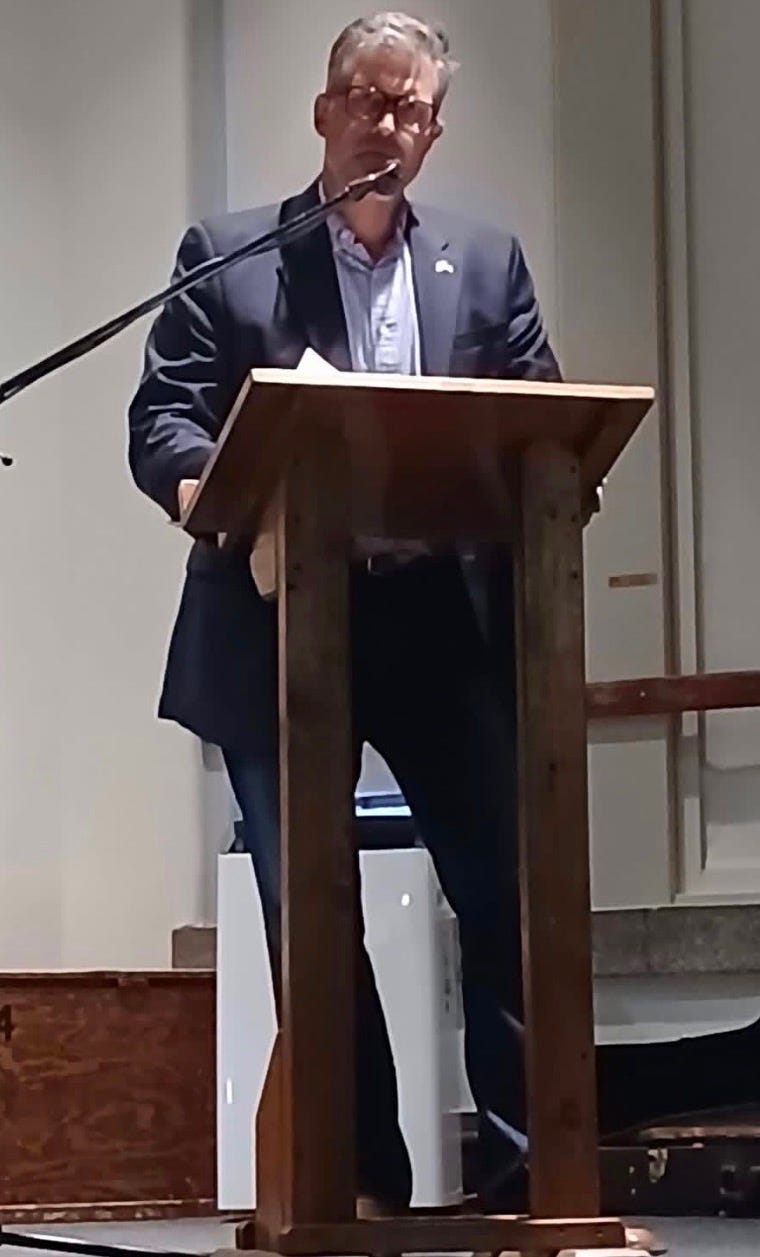
My tension fades as we play to 25 enthusiastic people who applaud and sing along for a little more than an hour. Not a bad start for something we generated buzz with through grassroots advertising and word of mouth. In a word, I had fun.
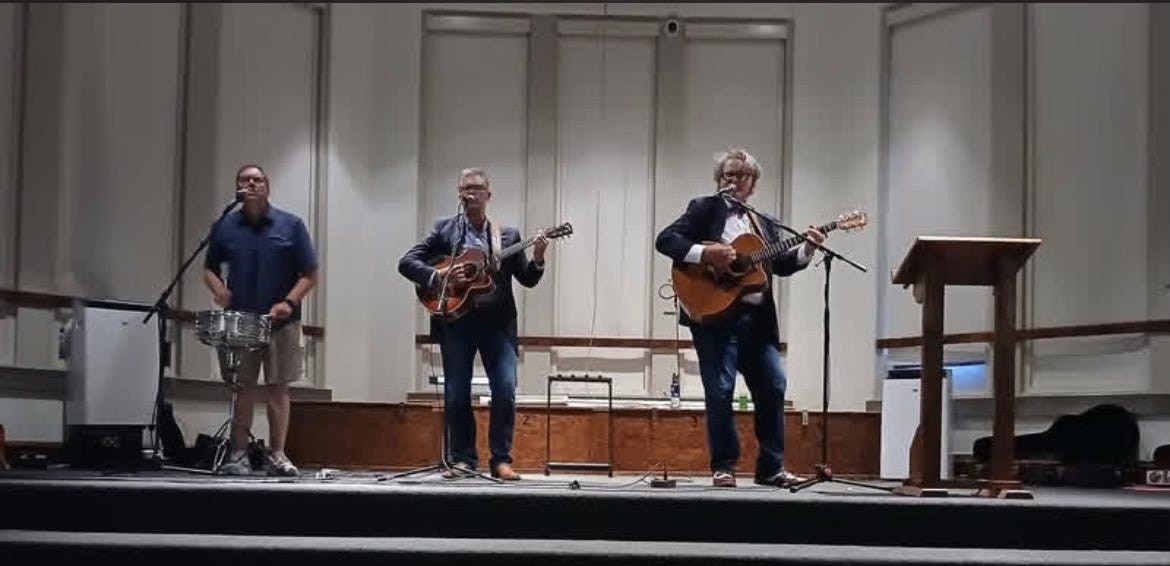
I even sell a few copies of my novel. Doug and I exchange signed copies. Winning.
People are pleased, a few blown away by the show, saying they wish they’d been able to get more of their friends to join them.
“Next time.” I say.
A musical show producer attended. He liked it. The message. The music. What I conveyed. He’s interested in building this into something bigger and more impactful.
Stay tuned as it comes to a city near you.
I hope, anyway.
My books are available through Amazon and are listed on Fleur Hull’s the Substack Bookstore.
Thanks for sticking with me.
Please consider becoming a paid subscriber. It’s $2 a week—less than a beer when you go out and perhaps as satisfying without the caloric deficit—and $80 annually. It really helps me as a writer, and you’ll receive access to exclusive content including advanced project previews and releases. Thanks!
Thank you for including me from afar, Ivan!
Can you come to Monterey, CA? The Monterey Hyatt is very close to DLI, and they do have smaller venues that would drive a military presence. Please come.